 Boston Lawyer Blog
SJC confirms broad reach of whistleblower protection


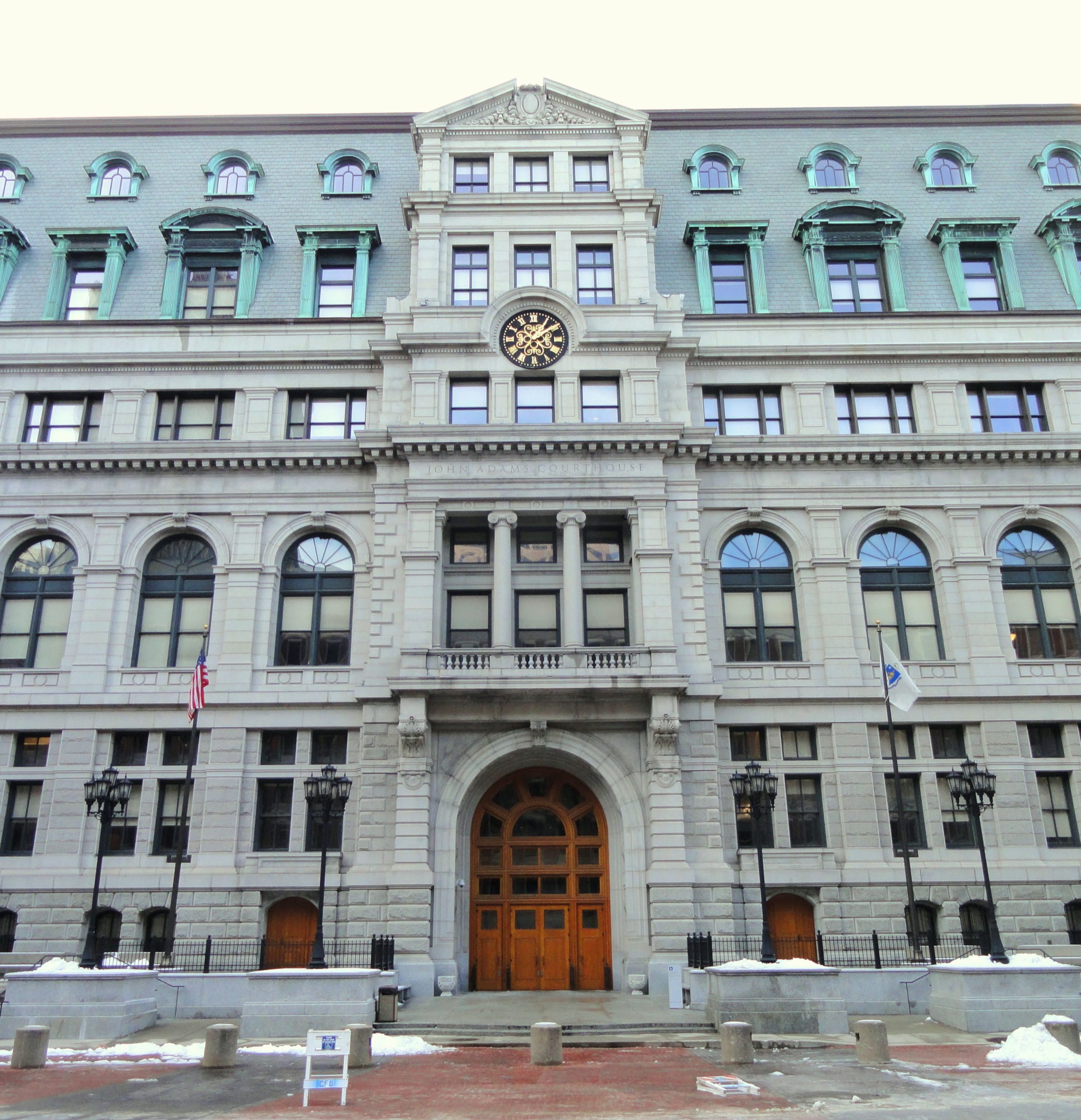 Earlier this week, the Supreme Judicial Court issued a decision on the rights of public employee whistleblowers. The decision clarified what activity is protected under the Massachusetts Whistleblower Act, G. L. c. 149, § 185 (“MWA”), and addressed whether a public employee who is partially responsible for wrongful conduct, but reports the wrongful conduct, can still seek protection under the MWA.
Background
In Galvin v. Roxbury Community College, the plaintiff, Thomas Galvin, was the college’s primary campus security authority and was responsible for the school’s compliance with the Clery Act, a federal law that requires colleges and universities that receive federal financial aid to disclose crime statistics to the U.S. Department of Education annually. In August 2010, the college’s HR director received two complaints from a student alleging that she had been sexually assaulted on campus by two college professors in previous years. When Galvin asked whether there were any reported crimes that needed to be disclosed to comply with the Clery Act, the HR director failed to disclose these complaints. In November 2010, after learning of the complaints and asking his supervisor about whether they should be disclosed, he was again told that there was nothing to disclose. The reporting responsibility ultimately rested with Galvin, who decided not to disclose the allegations in the college’s 2010 Clery Act report. On the same day, Galvin’s supervisor arranged for the student who made the allegations to be provided with a scholarship for the remaining balance of her semester bill.
In early 2011, Galvin met with Department of Education employees to seek guidance on reporting the two assault allegations and compliance with the Clery Act; the employees told him that they were unsure about his situation and that they would get back to him. In July 2011, Galvin met with staff from the State Auditor’s office and told them about the assault allegations, the college’s failure to report the allegations, and the scholarship given to the complaining student. The State Auditor’s staff notified the college’s chair of the board of trustees about Galvin’s disclosures, which began a formal investigation. That investigation determined that the college’s failure to report the allegations violated the Clery Act. Two months after the investigation concluded, Galvin received a negative performance evaluation largely due to his role in failing to ensure Clery Act compliance. One month later, he was terminated.
Lower Court
Galvin sued the college for wrongful termination in violation of the MWA. To make out a claim under the MWA, public employees are required to show that (1) they engaged in protected activity, (2) an adverse action was taken against them by their employer because of the protected activity, and (3) the adverse action caused the employee damages. Here, the motion judge made two primary determinations: Galvin was a whistleblower as a matter of law because he reasonably believed the college’s failure to report the student’s allegations violated the Clery Act, and the question of whether Galvin was terminated because of his whistleblowing activity, rather than because of his own performance deficiencies, was a question for the jury to decide. The jury agreed with Galvin, concluding that he was indeed terminated because of his whistleblowing activity, and awarded him $980,000 in damages. The college appealed the judge’s decision granting summary judgment on the question of whether Galvin engaged in protected activity, arguing that that question should have been decided by a jury.
SJC Decision
In its opinion, the Supreme Judicial Court agreed with the motion judge’s conclusions and emphasized three points.
First, as to the MWA’s protected activity requirement, “where the activity objected to is undisputably illegal, nothing further is required to establish that the employee engaged in protected activity for maintaining a claim under [the MWA].” Here, the college’s failure to report the two sexual assault allegations were “undisputably illegal” because the college itself recognized that the allegations should have been reported to the Department of Education and the failure to report occurred repeatedly, as the student made multiple allegations over the course of several years. The court noted that where the legality of the activity was disputed, or an employee’s belief in the activity’s legality erroneous, the question of whether the employee engaged in protected activity is a “more complex” question.
Second, a public employee whistleblower does not lose MWA protection even if they are involved in the wrongful activity. Stripping whistleblower protections from employees involved in the wrongdoing would discourage the revelation of that wrongdoing, which is contrary to the statute’s purpose. And, as the Court pointed out, employee involvement in the wrongdoing is not uncommon; it is often how employees learn about wrongful activity in the first place. The employee’s own misconduct, however, would factor into the question of whether they were terminated because of their whistleblowing activity or for their role in the misconduct.
Third, for an employee to establish that they engaged in protected activity, they must show that their objecting activity was based on a reasonable belief that the employer’s actions are unlawful. This reasonable belief requirement is automatically satisfied where the activity in question is undisputedly illegal. Contrary to the college’s position, an employee must only show that their belief that the activity was illegal is in “good faith” when that belief is erroneous. When the objection is “undisputably unlawful,” as it was here, the employee does not have to show good faith.
The Court’s decision is a positive step in bolstering whistleblower protections and protecting the rights of public employees to report illegal or unsafe actions by their employer without fear of reprisal.
If you believe that you have been retaliated against for engaging in whistleblower activity, or if you have another workplace legal concern, contact our employment attorneys at (617) 742-6020.
* Our blogs are written by the firm’s attorneys, without the use of AI or ghostwriters



